
A coffee table can make or break your living room. It anchors your seating, sets the tone for your space, and plays both a functional and aesthetic role.
If you’ve ever brought one home that felt too big, too small, or just off, you’re not alone. Here’s how to choose the perfect coffee table—every time.
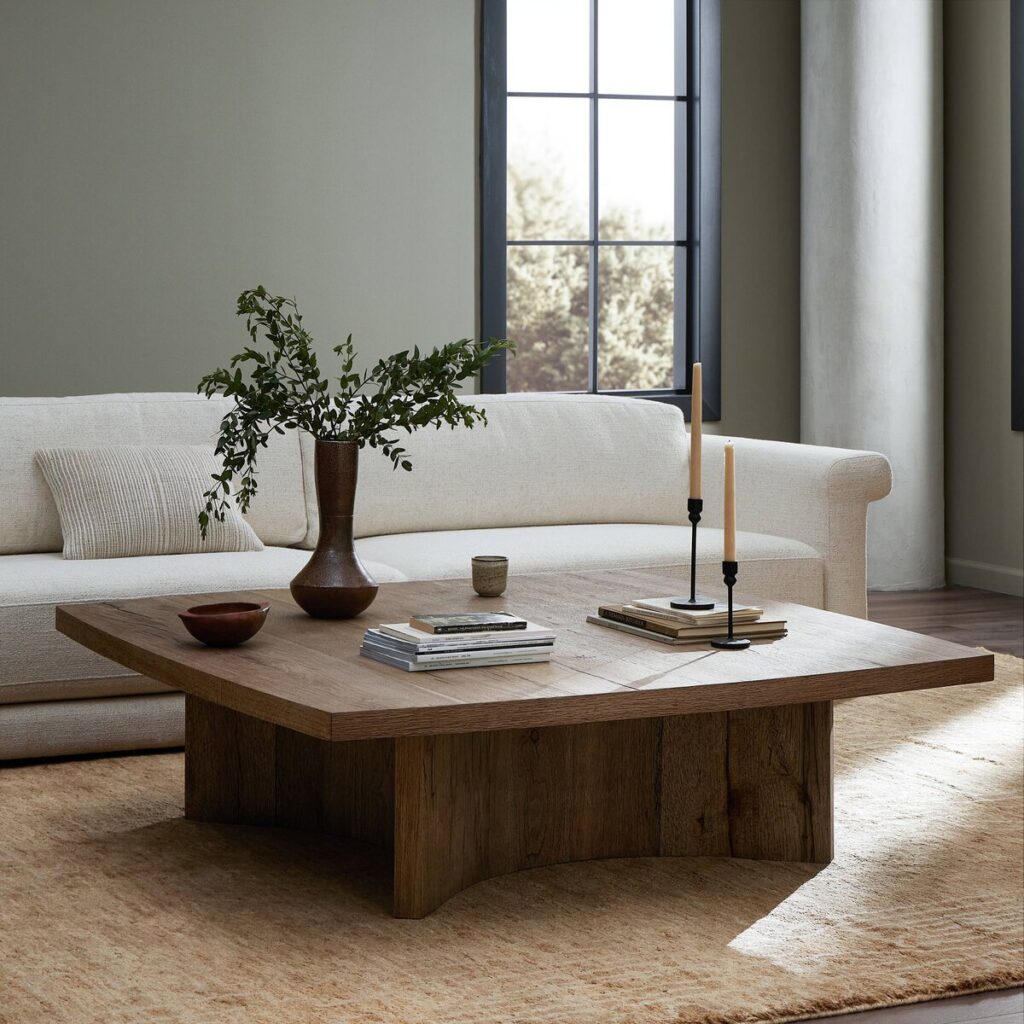
1. Start with Size & Proportion
This is the most important step—and the one people get wrong most often.
Here’s the rule of thumb:
- Your coffee table should be about two-thirds the length of your sofa
- Height should be equal to or 1–2 inches lower than your sofa seat
- Leave 16–18 inches between the table and seating for comfortable movement
Why it matters:
A table that’s too large overwhelms the room, while one that’s too small feels disconnected and impractical. Getting the scale right instantly makes your space feel more polished and intentional.
2. Choose a Shape That Works with Your Layout
The shape of your table should complement your furniture arrangement and flow.
Best uses by shape:
- Rectangular: Great for standard sofas and longer spaces
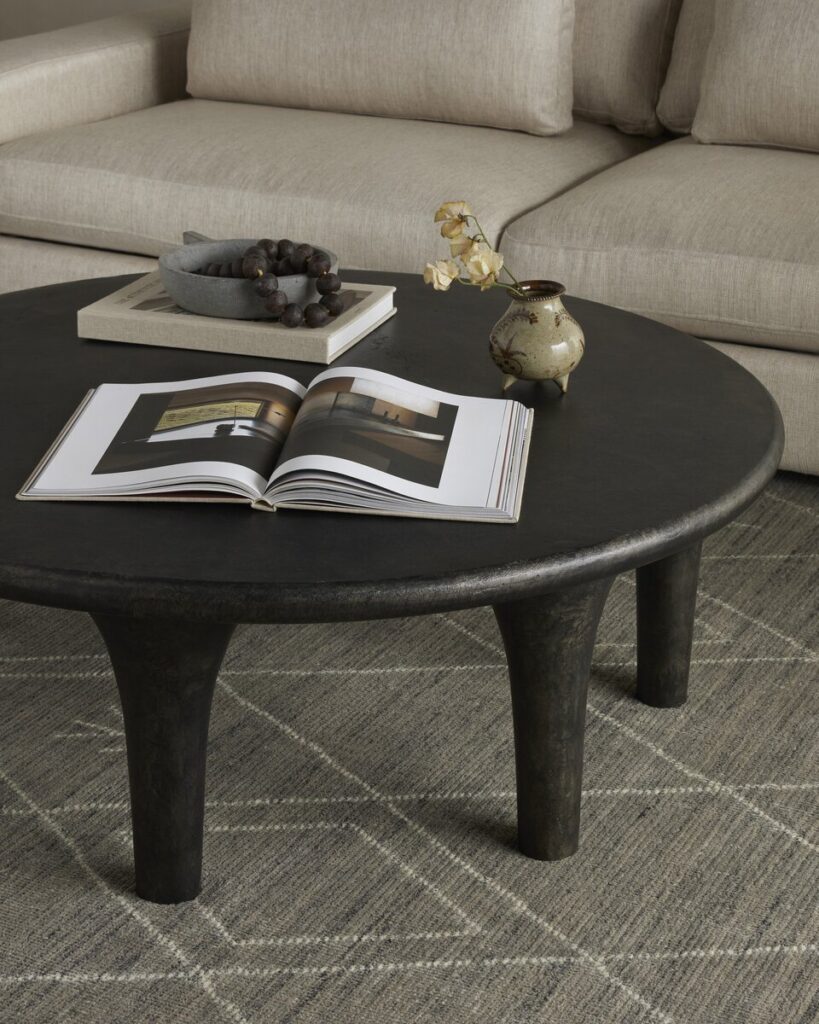
- Round / Oval: Perfect for smaller rooms or homes with kids—no sharp edges
- Square: Works well with sectionals or large seating arrangements
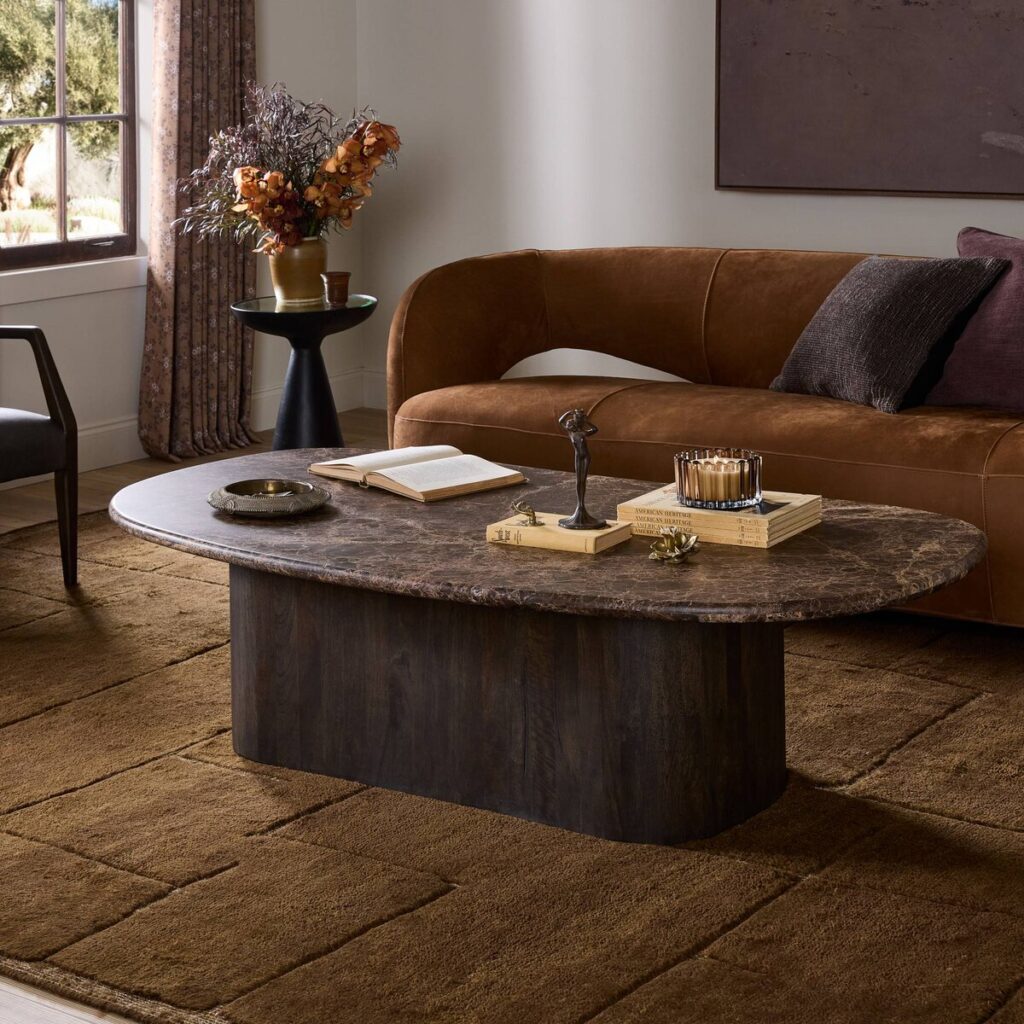
- Abstract / Organic: Adds softness and visual interest to modern spaces
Designer tip:
If your seating has a lot of straight lines (like a boxy sofa), a round or oval table can balance things beautifully.
3. Define the Function First
Before choosing a style, ask: How will you actually use this table?
Common uses:
- Entertaining (drinks + snacks)
- Everyday living (remotes, books, décor)
- Storage (blankets, magazines, hidden clutter)
- Multi-use (work-from-home, kids, games)
What to look for:
- Trays for flexible styling + function
- Shelves or drawers for added storage
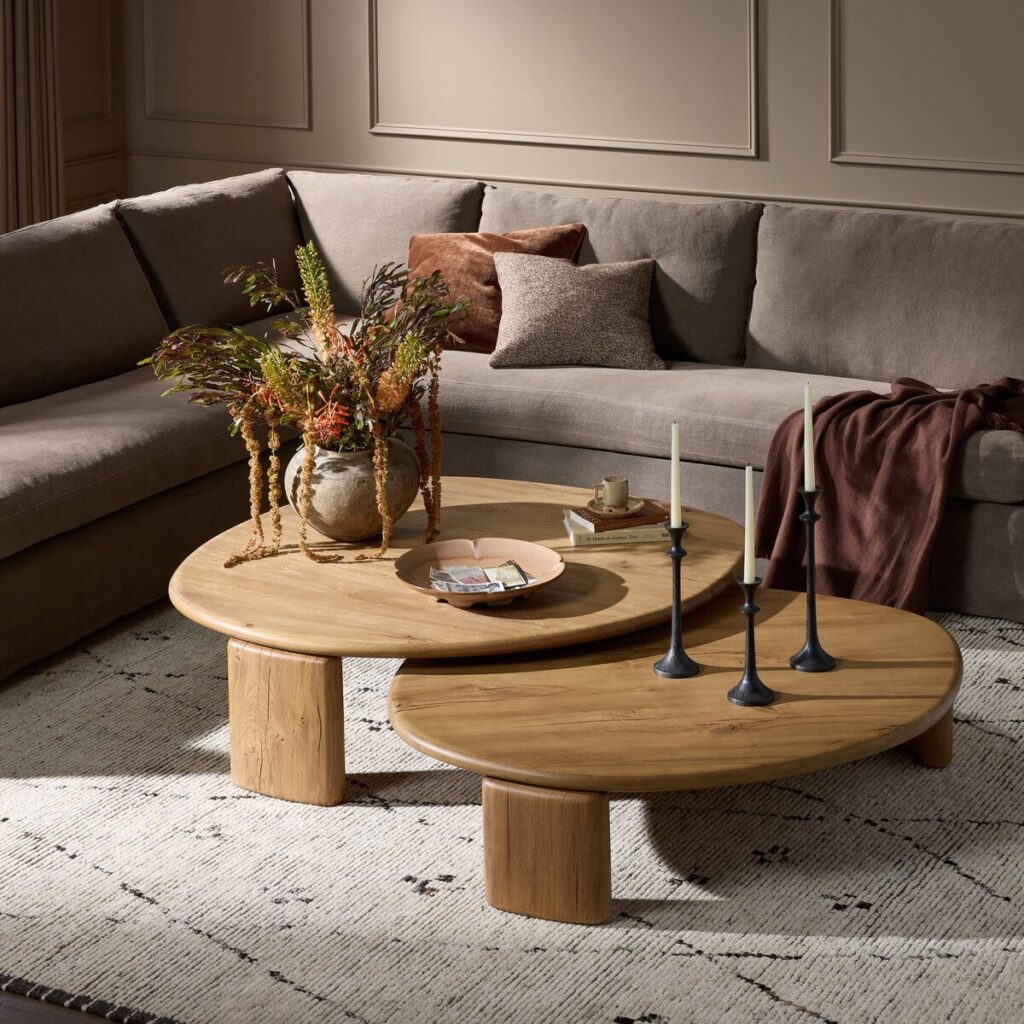
- Nesting tables for versatility in small spaces
Why it matters:
A beautiful table that doesn’t fit your lifestyle quickly becomes frustrating. Function should always lead.
4. Pick a Material That Matches Your Lifestyle
Material isn’t just about looks—it affects durability, maintenance, and how the space feels.
Popular options:
- Wood: Warm, timeless, and forgiving for everyday use
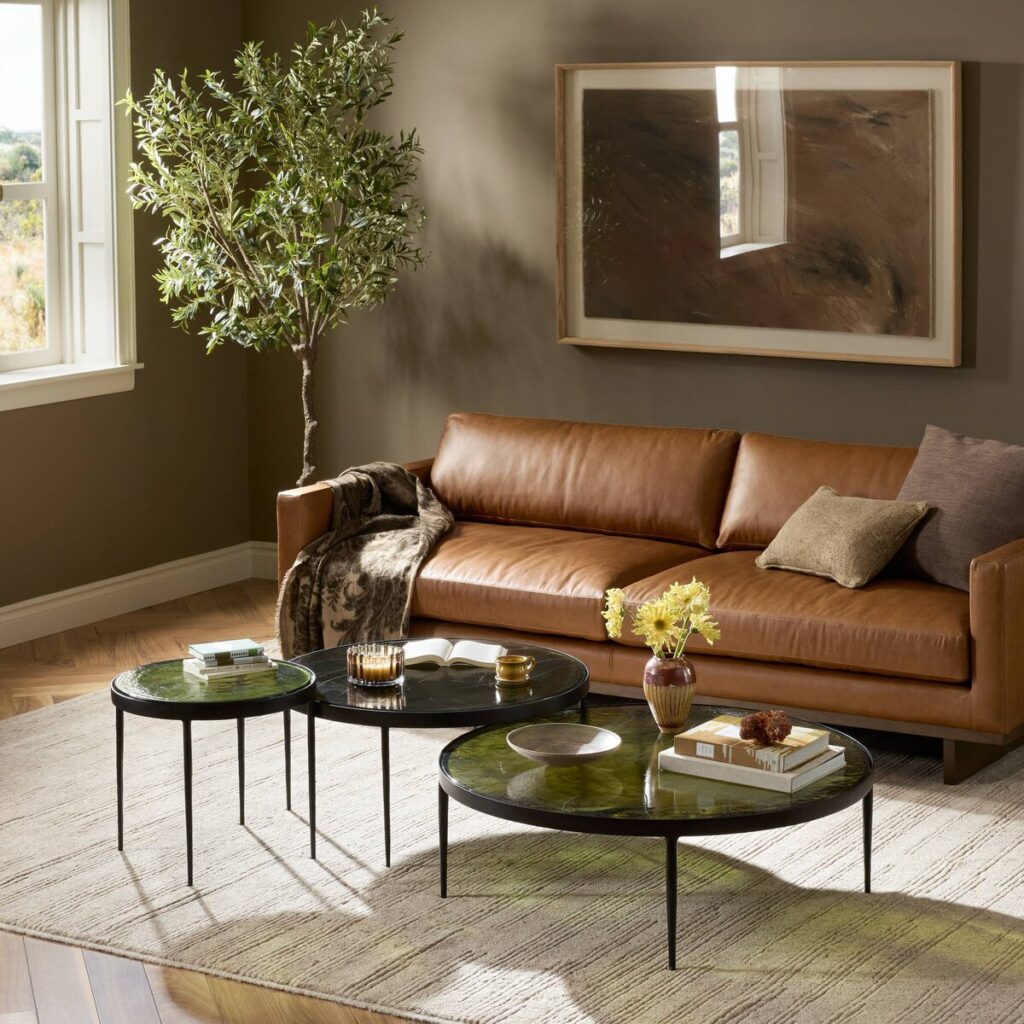
- Glass: Light and airy—great for small spaces, but shows fingerprints
- Stone (marble, travertine): Elevated and high-end, but heavier and more delicate
- Metal: Sleek, modern, and durable
- Upholstered (ottoman-style): Soft, cozy, and family-friendly
Quick lifestyle guide:
- Kids or pets? → Opt for wood, upholstered, or rounded edges
- Want a luxe look? → Stone or mixed materials
- Small space? → Glass or lighter finishes
5. Let Style Tie the Room Together
Your coffee table should feel like a natural extension of your overall design—not an afterthought.
Ask yourself:
- Does it echo the tones already in the room?
- Does it contrast in an intentional way?
- Does it match the level of formality of your space?
Examples:
- Modern space → clean lines, mixed materials
- Traditional → rich wood, classic silhouettes
- Coastal → light woods, textured finishes
- Organic modern → curved shapes, natural stone, warm neutrals
Pro tip:
Mixing materials (like wood + metal or stone + wood) often feels more elevated than matching everything exactly.
Final Thoughts
The perfect coffee table balances size, shape, function, material, and style. When all five work together, your space feels cohesive, comfortable, and effortlessly elevated.
If you’re unsure where to start, focus on scale first—then layer in the rest. Everything gets easier from there.